Showing posts with label Music. Show all posts

Wednesday, August 26, 2009

The PEG System

While teaching the High School class at church, we were introduced to a new way of "grading" music called the PEG System. The beauty of the PEG system is that it can be applied to more than just music. You can use it to grade TV shows, movies, and pretty much anything else you spend your time doing.

So, how does it work? Well, you have 10 points, and you get to split these 10 points among the three categories, which are P(rofitable), E(mpty), and G(arbage). So, a hymn like "Amazing Grace" would be something like 10-0-0. A song like "Row, Row, Row Your Boat" would be 2-6-2 (it's useful for teaching kids music, but really, the song doesn't MEAN anything). A song like "More Human Than Human" by Rob Zombie would be something along the lines of 0-4-6 (bad language, but the song really doesn't MEAN much at all if you listen to the actual words).


Now, here's where it gets tricky. The way you use the scale will depend on your values. For example, if you are a high schooler, you probably aren't going to say there's any profitable parts to "Row, Row, Row Your Boat", but as a father with two kids in Piano, I see some profitability there.


If you let your Christian values slip, then you'll miss the point of the PEG System. If you start to think things like drugs, alcohol, and bad language as somewhat profitable, then you'll slew the rankings and water them down.


It's not much, but it's a pretty simple way to grade Pop Culture elements as you encouter them. Are they Profitable, Empty, or Garbage?

Thursday, August 13, 2009

Christianizing Pop Culture

Tonight I wanted to introduce a concept I call "Christianizing". Christianizing is taking some secular (or "of the world") and tweaking it to make it "Christian". It's important to note that the secular being Christianized is not intrinsically bad or evil, but it's not definitively "Christian". So, in order to justify listening to certain music or reading certain books or watching certain movies, we as Christians try to either invent Christian undertones in the work or we take the work and tweak it to make it Christian. We're going to look at some examples of both today.
The first I want to cover is a growing trend of people writing books that invent a Christian undertone in popular works of literature. One example is Harry Potter. I'll leave the debate about whether Christians should or should not read the series for another time. However, what we can look to is that the books were not written with Christian themes or elements in mind. However, several books have come out that try to say just that. Head on over to Amazon.com and search for "Finding God in Harry Potter" (or click here and I'll do it for you). The very first result is a book entitled "Looking for God in Harry Potter" by John Granger (hey, that is pretty similar to what I said to search for!). From the books own description the author "contends that Rowling is writing in the tradition of Tolkien and C. S. Lewis. Are they just a good read, or do they nourish the soul as well?"
I think it's very important at this point to say that yes, I have indeed read and thoroughly enjoyed the Harry Potter series. I have also read Tolkien's works and some of C.S. Lewis and I can tell you that yes, the Harry Potter series is written similarly, but not in the sense the author is saying. Both Tolkien and Lewis were professed Christians when they wrote their masterpieces (The Lord of the Rings saga and The Chronicles of Narnia series, respectively). J.K. Rowling has made no such claim and some aspects of her life point to her not being a Christian (that doesn't give Christians an occasion to judge, but since only God knows the heart, I'm working with what I've got). Also, the thematic elements in Tolkien and Lewis are the central emphasis of the books, whereas in the Harry Potter series, they are more to push the story along and have you rooting for the right side (we all love a good underdog story, don't we?).


Another series that pushes this ideal of over-emphasizing Christian themes to justify reading secular material is the "The Gospel According To" series. What they have done is gone through secular life and grabbed popular materials to "Christianize". They cover everything from Disney to Dr. Seuss to The Simpsons. While these books do indeed point out the good aspects of these various works, whether they be TV, movies, or books, they are often used as a way for Christians to justify reading/watching/partaking. Reading Dr. Seuss is not a bad thing in and of itself, but most of the books are pretty empty of real content or values. Dr. Seuss is a great example of something that is neither good or bad, just kind of there. What books like "The Gospel According to Dr. Seuss" try to do is make an arguement that the books are indeed Christian by making weak arguments and real stretches to connect the dots. Again, Dr. Seuss isn't bad, but don't try to make his works into a great theological work.
One more example I'd like to cover is the realm of music. I personally listen to sports talk radio and Air1 (http://www.air1.com/). Air1 plays both Christian music and clean secular music. It's important to make the distinction that there are indeed two different types of music being played. What some Christians do is listen to a station like Air1 and hear music by "Lifehouse" and "The Fray" and tweak the meaning of the songs to make them reflect Christianity. This happens most often to love songs. Christians like to take that love song and tweak it to be talking about Jesus or God instead of the person the song writer intended. It's important to say right here that there are indeed wonderful love songs written to both our God and our Savior, but in order to justify and "Christianize" other artists, we change the meaning of ANY love song to be about our relationship with Jesus. Love songs referencing a godly love between a man and a woman are perfectly fine (you may have heard of this little book called "Song of Solomon" or "Song of Songs", depending on your translation). Love songs to our God and Savior for all the wonderful things they have done for us are great too (you may have heard of the book of "Psalms" too). However, it's important to remember that not all love songs were meant to apply both ways.


When it comes to Christianization, what we need to ask ourselves is if we really need a book to point out Christian themes and elements, should we really be involved in the first place? Like I said, I have read the Harry Potter books and I enjoyed them, but I don't pretend that they strengthened my relationship with Christ. So the real question is, if it doesn't strengthen my walk with the Lord, then what DOES it do?

The Bible tells us to not be "conformed to this world" (Romans 12:2). I'm not supposed to try to fit in with the world around me. I'm supposed to stick out like a sore thumb. The calling of Christ pushes me to transformation. Instead of looking like everyone else, I'm supposed to look more like Christ. It's become a cliche over the past 10 years or so, but I'm really supposed to ask myself, "what would Jesus do?" Would Jesus read Harry Potter? Would Jesus watch The Simpsons? Would Jesus listen to "Lifehouse"? If Jesus is the true standard of my life, then everything I allow in is supposed to please Him. What Christianization does is makes us conformers. It trys to make us look just like everyone else. We are supposed to be the light of the world (Matthew 5:14-16). We're supposed to shine the light of Jesus and direct all people to Him. If we look and act just like everyone else, no one will ever notice us, and we won't be pointing the way to Christ.

Tuesday, August 4, 2009

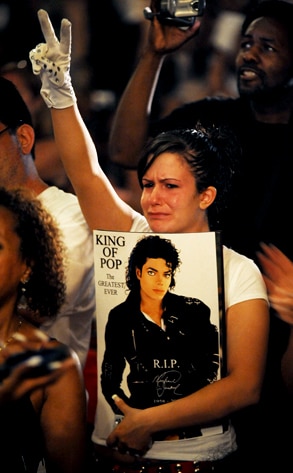
Celebrity Idolization: Michael Jackson's Death

Celebrity Idolization is a major issue in modern Pop Culture. Whether consciously or not, we look up to the people who appear on TV, the movies, and on the radio. We view them as better than us just because they can act and/or sing. The problem is that most of them don't live in such a way that we SHOULD be looking up to them.


A great example of this is the events surrounding Michael Jackson's death. Michael Jackson died June 25th, 2009 at the age of 50. Once news of his rush to the hospital and his critical condition broke, people started losing their minds. I was one of the first people at my workplace that found out about it (there's a small group of us who try to keep up on the news during downtime a twork). Once I mentioned it to one of my co-workers (people overheard me), I suddenly had 5 different people at my cubicle looking over my shoulder at the screen desperate for updates. Someone that hadn't thought or cared about 10 minutes earlier suddenly became the most important thing in their lives at that moment. People were on their cell phones calling relatives. And my workplace was just a small sample of what began happening across not just America, but the entire world (stats on Internet usage spikes once news broke).


Michael Jackson's funeral was later announced. It would be held at the Staples Center in Los Angeles on Tuesday, July 7th, 2009. People would be able to register for a lottery to receive two of the 17,000 free tickets that would be given away. The winners would be given wristbands and unique ID's that would prevent ticket scalping. 1.6 million people registered, roughly the entire population of the Phoenix metropolitan area (1.3 million at the time of the 2000 Census).


In order to further accomodate this worldwide event, the Jackson family would provide live video feeds to go out on the Internet and across various TV stations so that anyone in the world could watch. In the US, the funeral was carried on 18 channels. According to the Nielsen ratings, it was watched by more than 31 million people and earned a 20.6 share. This was for an event held in the middle of a workday (Link). To put that in perspective, the 6 major TV networks that night (CBS, NBC, ABC, Univision, FOX, and Telemundo) averaged 29.2 million viewers that night TOTAL (Link). So, with people home from work and watching TV at home that night, the funeral, which was held during the day on a work day, had nearly 2 million more viewers on TV.


The online feeds are even more telling. The funeral was carried on pretty much every major video streaming site. The Jackson funeral was, for the most part, the second-most watched event on the Internet of all time (first place was Obama's inauguration). MSNBC reports that they had more than 19 million video streams that day (not all of them were live during the funeral), a new record for them. CNN had 9.7 million live video streams. Facebook, which had an integration with CNN.com for that day, reports an average of 6,000 status updates per minute from people taking part. Ustream reports nearly 4.6 million viewers. ABC News reports nearly 6 million through it's various sites (Yahoo, Verizon, ABC, etc). MTV reports that, since his death, views on Jackson's music videos, documentaries, and interviews are up 10,193% from the week before (yes, that's PERCENT, not total numbers). For even MORE statistics about all this, I highly recommend visiting this site which sums up the information from each source (some of the same information is in the NY Times article linked above).


Is it wrong to mourn the loss of someone? Of course not. The Bible specifically tells us TO do it (Ecclesiastes 3:4, Romans 12:15). The problem is the extent to which people have taken this. Within the first week of his death, more than a dozen people in Australia had committed suicide directly citing Michael Jackson's as the reason, with over 50 people calling suicide hotlines on the brink (Link). Those are obviously the most extreme examples, but are very telling. The videos of people weeping in the streets and laying flowers on makeshift memorials across the world showed us exactly what it looks like to mourn like you have no hope (1 Thessalonians 4:13). And all of this was over someone that the vast majority of people had never met in their lives.


As Christians, whenever someone dies, the first question to enter our minds should be where that person will spend Eternity (the second question is what we could have done to make sure that person spent Eternity in Heaven). I have never personally heard a testimony of faith from Michael Jackson, but that doesn't mean that he never accepted Jesus Christ as his personal Lord and Savior. However, that was not the focus most people took when they mourned his death. Instead, we focused on the great loss to this world and to ourselves (nevermind the fact that Michael Jackson hadn't been culturally relevant except as a punchline for over 10 years). Most people had lost their idol.


I really do hope that Michael Jackson was saved and is now in Heaven, but his death really shouldn't mean any more to me than any other death. I have never met him nor anyone in his family. All I know about him really is that he could sing and dance. Is that enough to make him someone to look up to? Unfortunately, according to American Pop Culture, yes it is, and that's pretty sad.

Thursday, July 30, 2009

Resources: Plugged-In Online

Today is the first entry in what will be an ongoing series of various resources you can use in order to live a more pure life in today's world. Until I can come up with a catchier title, I'm just going to call this series "Resources". We're going to begin with Plugged-In Online.


Plugged-In Online (http://www.pluggedinonline.com/) is a website put together by Focus on the Family. What they do is review movies, TV shows, music, and video games from a Christian perspective. Instead of giving a rating the movie based on the usual standards, they review them based on content and what are the appropriate and inappropriate elements you'll be subjected to if you watch/listen/play.

The website first categorizes what they are reviewing (Movies, Video/DVD, Music, Television, and Games). The movies section covers films that are currently in theaters, while Video/DVD covers things that are currently out on video or DVD (snazzy, eh?). The other three are pretty self-explanitory. I use it mostly for the Movies section, so that's what I'm going to concentrate on here.

When you click on an article to read, they start off with a brief synopsis of the plot. This is to give you a general idea of any blanks you might need filled in before partaking. Don't worry, they do NOT spoil the plot. They give a Spoiler Warning before they list anything that will spoil the movies/shows plot lines.

After that, they list out the Positive Elements. They are pretty thorough, and sometimes some of the positive elements they list are kind of a stretch. Take, for example, this Positive Element from the movie G-Force:
When in the midst of a smash/crash chase scene that concludes with a massive fireworks explosion, one of the careening guinea pigs looks at some observing children (and us) and says, "Don't try this at home, kids."
While that is indeed a positive element, it's kind of stretch, but it does go to show you how thorough they really are in their reviews. This section also gives you a good idea of what to reinforce with your child if you take them along with you.

After that, they start to review the bad stuff. They break the bad stuff into several different categories (Sexual Content, Violent Content, Crude or Profane Language, Drug and Alcohol Content, and Other Negative Elements). They continue their thoroughness in each of these different categories as they break down specifically what occurs in the movie. For example, they will tell you how many times various words are used in the film, even down to "jeez", "suck", and "what in the heck?" (again using the G-Force review as an example). In place of the filthier language, they give us the good ol' grade school trick of "s---" and "f---" (remember using the phrase "the f word" back in the day?) instead of the actual words. Again, they will give you a Spoiler Warning before they spoil anything you may not want to know before seeing the movie.

Finally, they give you a conclusion on the movie. This is the writer's general summary of taking the positive elements and the negative elements and telling you their overall opinion on the movie. By the time you've reached this point, you already should have a pretty good idea about the movie, but they use this space to explain if the negative moments are isolated and barely noticeable, or if they permeate the entire movie.

Clarinda and I personally use Plugged-In Online for help in making our movie-watching decisions. We've all been there where a movie trailer has us excited to see a movie, then we go watch it and wonder why they had to add all the filth to it. Plugged-In Online will give you a warning beforehand on what filth you'll have to subject yourself to in order to see the movie. The key is to use this tool, and then use your own discernment on whether you want to subject you or your children to the good AND the bad in a movie.